
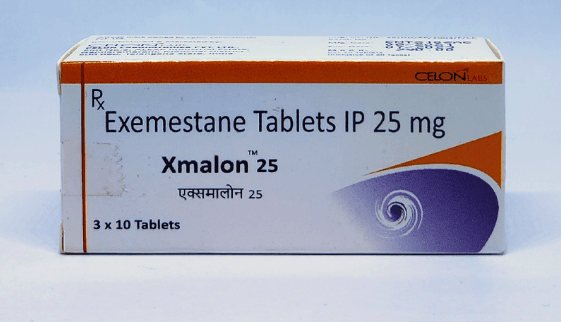
Exemestane (ex" e mes' tane) is an aromatase inhibitor that acts as an antiestrogen and is used to treat postmenopausal women with estrogen receptor positive breast cancer. Aromatase is the enzyme responsible for the conversion of testosterone to estrone (E1) and of androstenedione to estradiol (E2).
Specifications
Description
Introduction
Exemestane is a medication used to treat hormone receptor-positive breast cancer in postmenopausal women. It belongs to a class of drugs called aromatase inhibitors, which work by blocking the enzyme aromatase, reducing estrogen production in the body.
Lowering estrogen helps slow or stop the growth of certain types of breast cancer that require estrogen to grow.
Why Exemestane Is Used
Exemestane is prescribed for:
- Postmenopausal women with hormone receptor-positive breast cancer
- Women who have completed 2–3 years of tamoxifen therapy to continue reducing cancer risk
- Reducing the risk of breast cancer recurrence
Health Conditions Treated
- Hormone receptor-positive breast cancer in postmenopausal women
- Early-stage breast cancer as part of adjuvant therapy
- Advanced or metastatic breast cancer when estrogen is promoting tumor growth
Symptoms Treated
Exemestane helps:
- Slow tumor growth
- Reduce recurrence risk of hormone-sensitive breast cancer
- Improve overall outcomes in combination with other therapies
Side Effects
Common Side Effects
- Hot flashes
- Fatigue or weakness
- Joint or muscle pain (arthralgia/myalgia)
- Headache
- Nausea
Serious Side Effects
- Osteoporosis or bone fractures due to lowered estrogen
- High cholesterol
- Liver function changes
- Rare allergic reactions
Seek medical attention immediately if serious side effects occur, such as severe bone pain, shortness of breath, or signs of liver problems.
Diagnosis and When Prescribed
Exemestane is prescribed after:
- Confirming hormone receptor-positive breast cancer via biopsy
- Reviewing menopausal status (primarily for postmenopausal women)
- Evaluating liver function and overall health before starting therapy
How to Use Safely
- Take as prescribed, usually once daily after a meal
- Swallow tablets whole with water
- Regularly monitor bone density, liver function, and cholesterol levels
- Inform your doctor of other medications to avoid drug interactions
- Do not stop therapy without medical advice, as it can affect treatment outcomes
Prevention & Management Tips
- Maintain bone health with calcium and vitamin D supplements
- Engage in weight-bearing exercise to prevent osteoporosis
- Monitor for signs of joint pain or fatigue
- Attend regular follow-ups and lab tests to monitor therapy effectiveness
Common Questions
How long does Exemestane take to work?
- Effects on estrogen levels are rapid, but the benefits on cancer recurrence prevention are seen over months to years.
Can premenopausal women take Exemestane?
- Typically no. Exemestane is mainly for postmenopausal women. Premenopausal women require ovarian suppression if using it.
Does Exemestane cure breast cancer?
- No. It reduces the risk of recurrence and slows progression, but it is part of a comprehensive cancer treatment plan.
Can I take other medications with Exemestane?
- Some medications may interact. Always consult your doctor or pharmacist before combining with other drugs.
Conclusion
Exemestane is an effective aromatase inhibitor for managing hormone receptor-positive breast cancer in postmenopausal women. When used under medical supervision, it reduces recurrence risk and supports long-term cancer management. Regular monitoring of bone health and liver function is essential to ensure safe and effective treatment.